‘How
Might We’ questions framing the challenge more precisely by asking further
questions and start generating more converging
ideas for solving the issue (Dam & Siang, 2017).
How might we arrange the furniture to create more
space?
How might we provide access to more power points?
How might we provide comfortable chairs?
How might we purchase new furniture?
How might we include phone chargers in the room?
How might we improve the functionality of our
learning space?
The first two phases of design thinking process helped me to explore and analyse the various problems of my students in the classroom environment. It provide me an opportunity to see, think and analyse the issues of children with an empathetic and person centered approach. It is a stepping stone for me further involve with different educational issues such as how to cater inclusive education, learning differences of pupil, assistive technology in the classroom and mindfulness programs for the wellbeing of all children. It is significant to hold an open minded and divergent thinking skills to contemplate different problematic scenarios around ones teaching profession.
Synthesis occurring in the define stage when organise and interpret the gathered data to create a problem statement. Synthesis come through a proper analysis since we break down the concept or ideas to make useful decisions about the problem (Tutorials Point, 2018). The main two synthesis activities such as 5 whys and Fish-bone diagram are widely using to synthesise and define the problem of practice.
5 whys
It
is a commonly used technique to look deeper into the problems. For example,
students may be distracted in a particular learning space for different
reasons. Asking 5 whys helps to uncover the root cause of the issue.
Why students
are uncomfortable in the class?
Why
there is not enough room to move around?
Why this class room chairs are hard?
Why
the room is small and with few power points?
Why
the students seating arrangement in long way?
Developing
the problem statement
I am a student who is uncomfortable, distracted and bored
I am trying to work collaboratively with my peers to learn
But the chairs hurt and there’s not enough room for my belongings and my laptop is flat
Because the chairs are plastic, the room is small and the few power points are taken
Which makes me feelunmotivated trying to get on with
the tasks
Finally, turned into a one sentence
problem
Students find it hard to be comfortable and organised as the furniture is uncomfortable and impractical with too few power points and they feel unmotivated and dis organised.
Institute
of Design at Stanford (2017) denotes empathy is the centrepiece of
human-centred design process. Tom Barrett (2016) explains the term empathy in a
touching way that is it is a process of understanding which is ‘closer to
someone else’s truth’. I believe it is the responsibility and effort of the
designer to understand the people needs and what is meaningful to them. My
counselling ability for students also derived from this empathetic approach.
During the counselling I would able to pulse my students feelings and emotions
which act as a driving force to provide further comfort and suggestions for
their problems. There are various ways to empathize with people including
observing the context of their lives and engaging with people (conversation
more than interview). Certainly, empathy is a quality which can be practiced to
attain deeper levels of understanding and it is significant to best support
students with any learning difference or special needs (Broomhead, 2013).
The below provided exercise stands for students living with learning differences in the mainstream setting. The reasonable adjustment should be made to accommodate all students who attend classes in mainstream setting. A well planned physical environment is crucial to enhance the learning experience of a child with special needs. To acknowledge the needs of a particular child I will chart out the emotional and physical needs of student’s by applying empathy mapping tool. Empathy mapping is an activity which will help to develop a better understanding of other person’s circumstances from their viewpoints, behaviours and needs (Knox, 2014). Below provided an example of empathy mapping where I attempt to analyse my students’ needs through their eyes (modification in the classroom learning space) to achieve a better learning experience. This activity helped me to visualise and further explore more related issues by engaging with creative thinking.
THINK -Why I placed here -The desk keep moving – Poor classroom design -Why this light reflecting this way -The tables are too high -They should rethink about effective physical learning space – I can’t hear the teacher
SAY – I am tired -I am sleepy – I can’t read the board – I don’t understand the topic -I am hungry No one cares me
DO -Constantly check time showing various facial expression -spending more time on internet -get distracted with friends doing unnecessary talks in the class – squeezes eyes
FEEL -Tired -Bored – Anxious -Feel like useless Unmotivated – No one support -I feel stupid – feel like I am wasting time
PAINS -Bullying -No one believe in their ability -Teachers misconceptions Frustration -Sensory challenges Cognitive/behavioural challenges
NEEDS -Redesign the physical learning environment -Change the materials used ( light, tables, technology support) -Provision of accurate natural light -A quiet corner in the classroom -Avoid external noise entry to class -Support for study and life
GAINS -Acquiring knowledge – Personal development – Learning to overcome stressful situations in life -Self-actualisation – Realising one’s own personal difficulties and accepting the realities of any challenges exist and trying to overcome the issues.
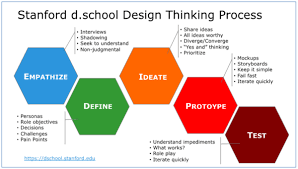
Empathy: Put yourself in the
shoes of those you are designed for to understand their physical and emotional
needs.
Define: In define mode,
bringing more clarity to the design process by crafting a meaningful problem
statement.
Ideate:
This
is the phase where designer generating ideas through brainstorming, mind
mapping or sketching techniques.
Prototype: It
is an iterative generation of artefacts, strategies or intervention to answer
questions which lead you closer to your final solution.
Test: In
this ultimate step, solving the identified issue by different strategies also
it provides solicit feedback and learn more about the user.
The five pillars of design thinking
In the educational field, teachers, parents and students are confronting with various challenges which revolve around the design thinking process and making modifications in the identified issue which might be done through improvising: curriculum, learning spaces, teaching methods in the classrooms, goals and policies (IDEO, 2017). The following post will discuss the challenges and innovation for physical learning space at my context by developing a deeper reflection on the first two phases of the design thinking process: empathy and synthesis. I believe that empathising and synthesising are the critical stages of design thinking process. As a postgraduate student from special education, I would like to use this opportunity of design thinking, for my students who want special learning environment and support in the mainstream setting.
Design thinking is a creative and holistic approach and it has wide application in various fields including product design, business design, organisational change and service design and so on. IDEO (2019) describing design thinking is a step-by-step process for creative problem solving. The beauty of design thinking is that the essential elements unite to form an iterative approach that allows users to continuously repeat the steps back and forth to get the best possible solutions (Edutopia, 2018). This innovative approach not only solve a problem of practice but also it reduces the risk associated with new ideas, it helps organisations to learn faster and accomplish the unmet needs of the people you are creating for (Melles, Anderson, Barrett & Thompson-Whiteside, 2015).
The
significance and benefits of technological tools in various sectors are evident
in this 21st century. Among that the correlation between technology and
education is widely accepted across the world.
The definition of technology gives the answer that technology must have
a realistic and useful application and must have a purpose (McGrath, 2011). The
use of technological tools within the diverse educational settings helping to
foster students and teachers abilities as well as update the way they think and
act and thus providing them new access to the world. Studies pointed out that
new technology can pass through 3 different stages. Initially, it faces the
least resistance into a ready market. At the second stage, users improve with
the new technology or replace old technologies. At the third stage, consumers
discover new functions for the technology based on its potentials (Naisbitt,
1982). In the education sector, we have arrived into the third stage where
users finding out new solutions which were not possible previously.
Connecting the latest technologies
for people with Autism.
Research
studies remarked, in this competitive modern world teaching is a complex
activity (Mishra & Koehlor 2006). As a postgraduate student in special
education and a teacher from India, I would like to discuss a range of
technological solutions applicable in the special education sector. As we know
that the teaching and learning process is quite challenging and unusual
particularly, dealing with people with a special need. In the case of people
with autism, I can say that learning and teaching process is furthermore
complicated because Autism spectrum disorder (ASD) is a developmental lifelong
disorder and facing triads of impairment such as restrictive and repetitive
pattern of behaviour, lack social interaction and communication problems in
their day to day life (Billstedt & Gillberg, 2005). Owing to the nature of autism disorder, every
person is different, with different abilities and needs. Hence provision of unique
educational intervention services needed for their academic and social skills
development especially in the early years of life.
Learning
is a continuous process and equipping the child for life after school.
Educators’ are facing many challenges such as socio-structural barriers,
understanding and managing behaviour, lack of training and resources, to
accommodate a child with autism in a mainstream class (Lindsay, Proulx,
Thomson, & Scott, 2013). In those
challenging situation emerging technological tools assisting the educator as
well as the children and providing immediate support throughout their life.
Technology alone can neither advance human species nor hold us back. Hence
educators must be aware of while introducing a new tool in the classrooms.
There are hundreds of apps and built-in features of devices are currently using
for assisting the child with autism. For
example, an AAC (Augmentative and alternative communication) app called ‘Avaz’
(Avazapp.com) is tailored to improve a child everyday communication purpose
which uses the picture as well as text to support people with communication
challenges.
An example of achievement from India.
In
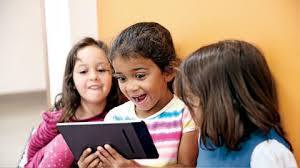
schools, teachers use the iPad, smartphone and tablets as a medium of
communication. I remember one of my student from India who was highly hyperactive,
nonverbal and autistic. Even at the age of 6, he will not speak with parents,
teachers or to anyone. But the therapist provided a tablet to promote his
interest to communicate with the support of pictures. Then, the magical
transformations have been started in that child’s behaviour. He learned the words, writing and speaking
with the support of that mini tablet. Whenever he wants to speak out, he will
type on that tablet. Thus at the age 8, he has written 3 books by printing on
the tablet which was published later and he received many awards from the
Indian government. You can watch his
story in the below-provided link where he was attending a media talent show
with his mother.
This
is a single example of achievement likewise numerous positive experiences are
evident which exhibit how technology supported to raise a child with autism.
The visual schedules on tablets are another great tool which help children to
complete their work, promote self-care and daily living. For example visual schedule for a school
morning day routine (prayer, group discussion, play, hand wash, morning snacks
and everything in between) help people with autism to learn and manage time and
master a routine by themselves. These visual schedules displayed on a large
screen in the classroom helping the children to learn independent living skills
among others. This kind various portable application in the tablet will assist
the child wherever they are and promote independence by completing daily
activities such as paying bills, shopping and travelling. IPad or tablets are
just one example of a technology tool that can be benefitted for independent
living.
Technology as a tool for developing
communication
The
technology helping an individual with autism to socialize via social networking
sites and keep connected with friends, families and social activities than
traditional methods. The communication with others through online giving a
chance for people with autism to work on their communication skills and further
may translate that into school, work and out in the community. At the same
time, there is a negative impact of this communication process called
cyberbullying. In this technological world, many teenagers are facing
cyberbullying. It is a kind of bullying or harassment by using digital
technologies like mobile phones and social media tools (Slonje & Smith,
2008). Those cyberbully- victim people may fall into poor mental health,
limited social connections, and depression problems compared with victims of
traditional bullying (Van Geel et al. 2014). Hence everyone especially
educators and parents should be vigilant about the harmful effects of provided
technological platforms to their children.
Interactive White Board versus
students in the classroom
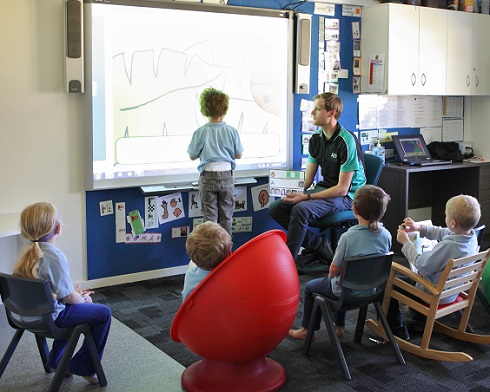
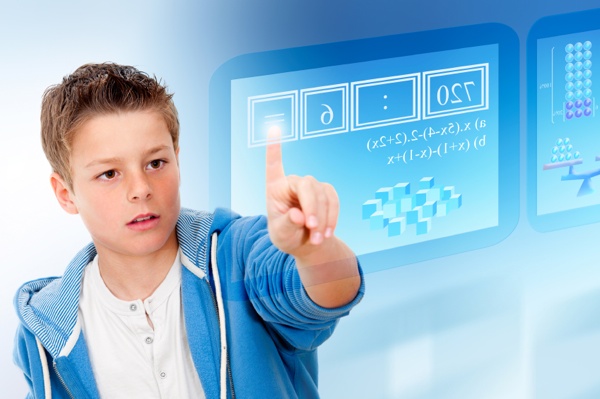
Nowadays
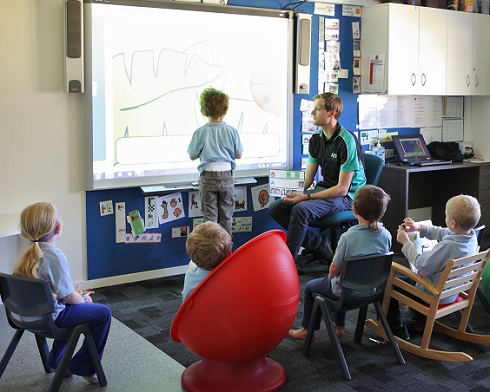
many schools are adopting an interactive whiteboard (IWB) as a great helping
tool for people with autism to modify their visual support, imagination and
social interactions. The main attraction of this IWB is the capacity to support
pedagogy depends on the visual modality of students on the spectrum (Aspect,
2019). Studies identified that students having autism paying more attention
during activities in the smart board and they used the tools to express ideas
and also modelling positive classroom behaviours for their peers (Advanced
Education, 2019). The interactive online tools, desktop drawing software helped
to transform the learning environment and gave autistic learners a voice in the
classroom. Hence interactive whiteboards are commonly using in the classroom
for students with autism to improve their communication, attention, computer
literacy moreover creative engagement. Despite IWB act as an effective teaching
tool, for a farsighted student, it will be a serious obstacle for meaningful
learning (McGrath, 2011). Even though touching a screen and seeing an immediate
reaction gives a positive reaction to many students but the farsighted student
face difficulty in reading when standing close to the screen.
An example of promoting creativity
Recently
Aspect (2019) introduced a social skill program called The Secret Agent Society
(SAS) for 8 to 12-year old children. This programme provides a set of resources
to promote children emotional and social skills with the support of technology-based
educational activities. It comprises of complex computer games, walkie-talkie
game and simple board games to identify simple and complex emotions and
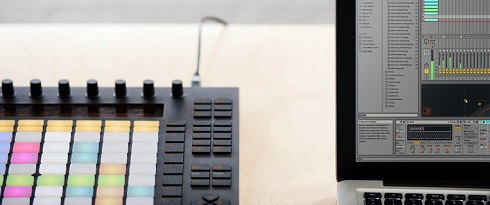
environmental clues. Similarly, a new music project launched to explore the
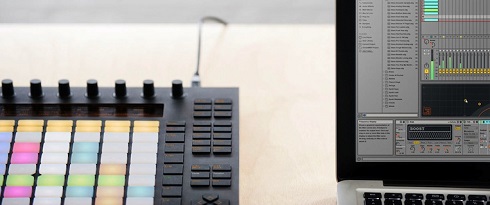
musical passion of people with autism. For that purpose using Ableton Live
Suite 9 software and Push instrument which makes different patterns, create
sounds, sequences and melodies and it is particularly suited for people with
ASD (Aspect, 2019). It is a remarkable example of technological use for
promoting creativity among people with autism.
Implementing Artificial
Intelligence for people with autism
As
an emerging technology, there is a great deal of excitement in Artificial
intelligence (AI) for people with ASD.
Artificial intelligence is related to building machines which can act,
react, adapt appropriately to specific demands of the situation with the help
of human intelligence (Flnlay & Dix, 1996). Many schools in the developed
countries already equipped the classroom with AI since it has the potential to
create a more meaningful experience for students especially people on the
spectrum. Latest studies pointed out that with the help of AI children with ASD
improved their communication and social skills about 30% (Sinha, 2018). Recent
studies find out that Artificial Intelligence can be used to detect autism at
the early stages with the help of algorithms (Sinha, 2018). The virtual
assistants such as Siri, Alexa, Cortana and Google were proven the skill of
communication support for people in the autism stream.
Can robots help ASD students?
There
are many robots are developed for helping people with autism especially for
their individualised therapy and communication skill development. Robots are
considering as great instructors for autistic children since they can repeat
instructions and answers numerous times without any tiredness. Nowadays various
type of robots is incorporated into the education stream ranging from simple to
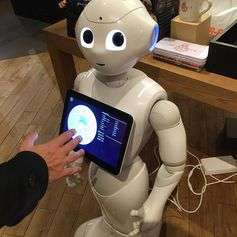
humanoids. In some schools in Australia, implemented a humanoid NAO robot which
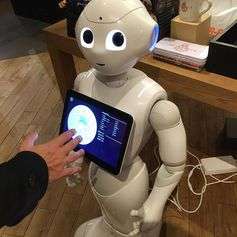
is particularly designed for children with ASD. This social robot NAO can talk
by itself and even seems to recognize some emotions with the help of built-in
cameras, detectors and microphones (Karsenti, Bugmann, & Gros 2017). The
interactions with robots help students with ASD to develop social skills. NAO
could help to develop a better sense of touch in people with autism and
self-awareness of their body further it can support autism therapies related to
the cognitive development of children with ASD. Studies prove that there are
several positive outcomes of the educational use of robots with ASD students
such as increased motivation and longer attention span, improved language
skill, improved socialization, improved writing and reading skill and improved
body control. Despite all these positive outcomes the initial contacts between
the students and robots may not successful always. Research shows that many
teachers are slightly reluctant to use the robots in the classroom and wanted
full control over the robot (Physorg, 2019).
While
discussing the contributions and advantages of Artificial Intelligence, it
should be useful to critically discuss the disadvantages too. Even though there
is enormous support for students creative learning, tracking a student’s
wellbeing would be harder for a robot or AI to interpret. Understanding the
emotional changes of a person precisely would not be successful for robots
hence the wellbeing and emotional intelligence will remain in the realm of
teachers. Human experience in making educational decisions about learning
pathways for students especially using background knowledge can be done
effectively only by the presence of an expert teacher. The very act of being
present with one’s body and using the body gesture for energise the classroom
and understanding the heart of students will remain safe with teachers than any
robot and AI. The relationships with children and their families and an
understanding of the context in which operate can never be replaced by AI.
Conclusion
The
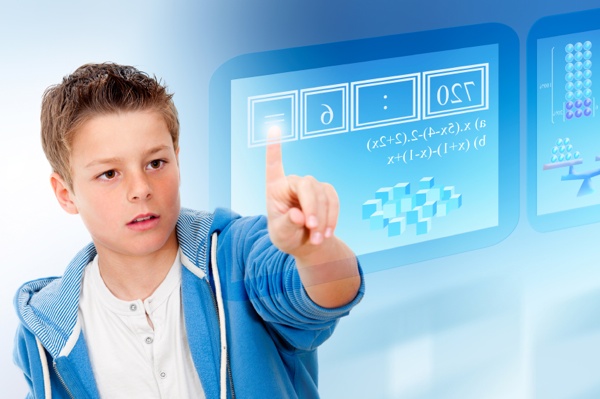
benefits of integrating technology in education are countless and certainly,
helping to achieve significant improvements in learning outcomes. Technology
can be used as a highly effective tool- just a tool. But I believe that the key
to technology in the classrooms dwells through teacher-student relationship.
Teachers need to first see the benefits of utilising technology and how it adds
greater value to the learning opportunities which they can offer to their students.
Thus, the sensible use of technology can augment the education process. Now it
makes sense that benefits of technology outweigh the cons.
Billstedt, E., & Gillberg, C. (2005). Autism after
adolescence: population-based 13-to 22-year follow-up study of 120 individuals
with autism diagnosed in childhood. Journal of autism and developmental
disorders, 35(3), 351-360.
Finlay, J., & Dix, A. (1996). An introduction to
artificial intelligence. Crc Press.
Karsenti, T., Bugmann, J., & Gros, P. P. (2017). Using
Humanoïd Robots to Support Students with Autism Spectrum Disorder.
Lindsay, S., Proulx, M., Thomson, N., & Scott, H. (2013).
Educators’ challenges of including children with autism spectrum disorder in
mainstream classrooms. International Journal of Disability, Development and
Education, 60(4), 347-362.
McGrath, K. (2011). Can Technology Promise Anything?. Antistasis, 1(2).
Mishra, P., & Koehler, M. J. (2006). Technological pedagogical
content knowledge: A framework for teacher knowledge. Teachers college
record, 108(6), 1017.
Naisbitt, J. (1982). Megatrends. New York, 17,
1982.
Slonje, R., & Smith, P. K. (2008). Cyberbullying: Another
main type of bullying?. Scandinavian journal of psychology, 49(2),
147-154.
Van
Geel M, Vedder P, Tanilon J (2014). Relationship between peer victimization,
cyberbullying, and suicide in children and adolescents: a meta-analysis JAMA.
Pediatrics 168:435–442
Nowadays
many schools are adopting an interactive whiteboard (IWB) as a great helping
tool for people with autism to modify their visual support, imagination and
social interactions. The main attraction of this IWB is the capacity to support
pedagogy depends on the visual modality of students on the spectrum (Aspect,
2019). Studies identified that students having autism paying more attention
during activities in the smart board and they used the tools to express ideas
and also modelling positive classroom behaviours for their peers (Advanced
Education, 2019). The interactive online tools, desktop drawing software helped
to transform the learning environment and gave autistic learners a voice in the
classroom. Hence interactive whiteboards are commonly using in the classroom
for students with autism to improve their communication, attention, computer
literacy moreover creative engagement. Despite IWB act as an effective teaching
tool, for a farsighted student, it will be a serious obstacle for meaningful
learning (McGrath, 2011). Even though touching a screen and seeing an immediate
reaction gives a positive reaction to many students but the farsighted student
face difficulty in reading when standing close to the screen.
An example of promoting creativity
Recently Aspect (2019) introduced a social skill program called The Secret Agent Society (SAS) for 8 to 12-year old children. This programme provides a set of resources to promote children emotional and social skills with the support of technology-based educational activities. It comprises of complex computer games, walkie-talkie game and simple board games to identify simple and complex emotions and environmental clues. Similarly, a new music project launched to explore the musical passion of people with autism. For that purpose using Ableton Live Suite 9 software and Push instrument which makes different patterns, create sounds, sequences and melodies and it is particularly suited for people with ASD (Aspect, 2019). It is a remarkable example of technological use for promoting creativity among people with autism.
As an emerging technology, there is a great deal of excitement in Artificial intelligence (AI) for people with ASD. Artificial intelligence is related to building machines which can act, react, adapt appropriately to specific demands of the situation with the help of human intelligence (Flnlay & Dix, 1996). Many schools in the developed countries already equipped the classroom with AI since it has the potential to create a more meaningful experience for students especially people on the spectrum. Latest studies pointed out that with the help of AI children with ASD improved their communication and social skills about 30% (Sinha, 2018). Recent studies find out that Artificial Intelligence can be used to detect autism at the early stages with the help of algorithms (Sinha, 2018). The virtual assistants such as Siri, Alexa, Cortana and Google were proven the skill of communication support for people in the autism stream.
There are many robots are developed for helping people with autism especially for their individualized therapy and communication skill development. Robots are considering as great instructors for autistic children since they can repeat instructions and answers numerous times without any tiredness. Nowadays various type of robots is incorporated into the education stream ranging from simple to humanoids. In some schools in Australia, implemented a humanoid NAO robot which is particularly designed for children with ASD. This social robot NAO can talk by itself and even seems to recognize some emotions with the help of built-in cameras, detectors and microphones (Karsenti, Bugmann, & Gros 2017). The interactions with robots help students with ASD to develop social skills. NAO could help to develop a better sense of touch in people with autism and self-awareness of their body further it can support autism therapies related to the cognitive development of children with ASD. Studies prove that there are several positive outcomes of the educational use of robots with ASD students such as increased motivation and longer attention span, improved language skill, improved socialization, improved writing and reading skill and improved body control. Despite all these positive outcomes the initial contacts between the students and robots may not successful always. Research shows that many teachers are slightly reluctant to use the robots in the classroom and wanted full control over the robot (Physorg, 2019). While discussing the contributions and advantages of Artificial Intelligence, it should be useful to critically discuss the disadvantages too. Even though there is enormous support for students creative learning, tracking a student’s well-being would be harder for a robot or AI to interpret. Understanding the emotional changes of a person precisely would not be successful for robots hence the well-being and emotional intelligence will remain in the realm of teachers. Human experience in making educational decisions about learning pathways for students especially using background knowledge can be done effectively only by the presence of an expert teacher. The very act of being present with one’s body and using the body gesture for energise the classroom and understanding the heart of students will remain safe with teachers than any robot and AI. The relationships with children and their families and an understanding of the context in which operate can never be replaced by AI.
The
benefits of integrating technology in education are countless and certainly,
helping to achieve significant improvements in learning outcomes. Technology
can be used as a highly effective tool- just a tool. But I believe that the key
to technology in the classrooms dwells through teacher-student relationship.
Teachers need to first see the benefits of utilising technology and how it adds
greater value to the learning opportunities which they can offer to their students.
Thus, the sensible use of technology can augment the education process. Now it
makes sense that benefits of technology outweigh the cons.
Billstedt, E., & Gillberg, C. (2005). Autism after
adolescence: population-based 13-to 22-year follow-up study of 120 individuals
with autism diagnosed in childhood. Journal of autism and developmental
disorders, 35(3), 351-360.
Finlay, J., & Dix, A. (1996). An introduction to
artificial intelligence. Crc Press.
Karsenti, T., Bugmann, J., & Gros, P. P. (2017). Using
Humanoïd Robots to Support Students with Autism Spectrum Disorder.
Lindsay, S., Proulx, M., Thomson, N., & Scott, H. (2013).
Educators’ challenges of including children with autism spectrum disorder in
mainstream classrooms. International Journal of Disability, Development and
Education, 60(4), 347-362.
McGrath, K. (2011). Can Technology Promise Anything?. Antistasis, 1(2).
Mishra, P., & Koehler, M. J. (2006). Technological pedagogical
content knowledge: A framework for teacher knowledge. Teachers college
record, 108(6), 1017.
Naisbitt, J. (1982). Megatrends. New York, 17,
1982.
Slonje, R., & Smith, P. K. (2008). Cyberbullying: Another main type of bullying?. Scandinavian journal of psychology, 49(2), 147-154.
Van
Geel M, Vedder P, Tanilon J (2014). Relationship between peer victimization,
cyberbullying, and suicide in children and adolescents: a meta-analysis JAMA.
Pediatrics 168:435–442

 BLOOMING TECHNOLOGY